The Best Book on Passive Investing for 2026
Why one classic book still beats endless ETF videos, hot takes, and conflicting advice in 2026.
In 2025, I published a similar article looking for the best beginner book on passive investing. The motivation was simple: many people know they should invest, but far fewer ever get started — largely because of information overload.
Since then, financial content has only become louder. Markets continue to swing between optimism and fear, mediocre advice floods YouTube and social media, and even high-quality resources can contradict each other. Access to information has improved, but clarity hasn’t.
That’s why this article exists again for 2026. It’s not a complete rethink, but a revision. I revisited the recommendations and asked a simple question: Is there now a better single starting point for understanding passive ETF investing?
The short answer is no — and that’s precisely why a clear, well-structured guide remains so valuable. In a fast-changing information landscape, long-term investing principles matter more than ever.
Most people already know they should start investing. They’ve heard about ETFs, passive investing, and “just buying the market.” That initial insight is rarely the problem.
What comes next is.
A quick Google search or YouTube binge opens the floodgates: endless videos, Reddit threads, hot takes, portfolio screenshots, and conflicting advice — often presented with total confidence. Even well-intentioned, high-quality resources frequently disagree with each other. For beginners, this doesn’t create clarity. It creates paralysis.
Many people never start investing at all — not because they lack discipline, but because they never found a resource that helped them think clearly about the topic.
Why Beginners Need One Good Book
For complex subjects, a well-written book still does something no algorithm can: it forces coherence.
The ideal beginner book on passive investing shouldn’t just say what to do. It should explain why certain approaches are more robust than others. That foundation is what allows readers to later evaluate new ideas, trends, and “opportunities” without getting pulled in every direction.
A strong beginner book should therefore:
- explain the economic and statistical reasoning behind passive investing
- address common myths and recurring mistakes
- provide practical guidance without drowning the reader in product details
If someone understands those fundamentals, everything else — brokers, platforms, tax details — becomes manageable.
Choosing the right book for yourself, or recommending one to friends or family, can easily be the highest-return financial decision of a lifetime. That’s why I wrote this article.
The Search for the Best Beginner Book
When looking for recommendations, three titles consistently dominate discussions on Reddit:
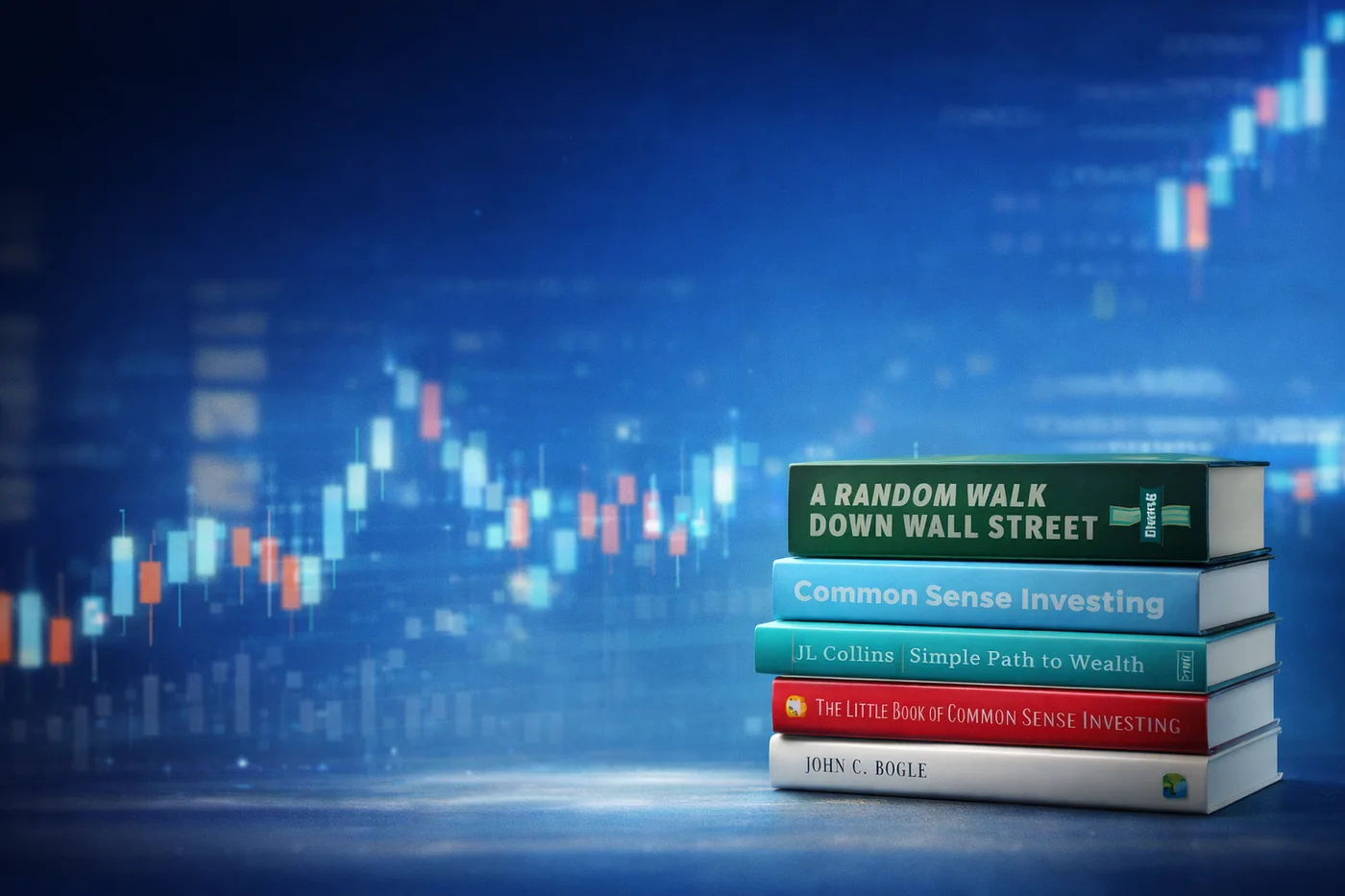
- A Random Walk Down Wall Street — Burton G. Malkiel
- The Little Book of Common Sense Investing — John C. Bogle
- The Simple Path to Wealth — JL Collins
All three are valuable. But they are not interchangeable.
Bogle’s book is an outstanding explanation of why costs matter and why index funds outperform most active strategies. Collins’s book is highly regarded as well — but it strongly advocates a U.S.-only equity approach like Bogle, which conflicts with the core principle of maximizing diversification through global exposure.
That’s where A Random Walk Down Wall Street stands apart.
Why A Random Walk Down Wall Street Still Wins in 2026
Originally published in 1973 and now in its 13th edition, A Random Walk Down Wall Street has aged unusually well. The latest edition incorporates modern topics — cryptocurrencies, NFTs, meme stocks, ESG investing — while evaluating them through the same evidence-based lens that underpins the rest of the book.
What makes it exceptional for beginners is not just what it recommends, but how it builds its case:
- a long history lesson on markets
- diversification across regions and asset classes
- new topics like factor investing explained without hype
Its longevity is an advantage. If you struggle with a concept or chapter, chances are thousands of readers before you have asked the same question — and might have discussed it extensively online.
The “Random Walk” Idea — Explained Simply
The book’s core concept is the idea that stock prices follow a “random walk.”
Prices move as new information becomes available. Because future information is unpredictable, future price movements are unpredictable as well. Past patterns may be interesting, but they don’t reliably forecast what comes next.
Think of it like flipping a coin. Even if it lands on heads several times in a row, that tells you nothing about the next flip.
The implication is powerful: instead of trying to outsmart millions of market participants, it is usually more effective to own the market itself — through low-cost index funds or ETFs — and let compounding do the work over time.
This idea remains just as relevant in 2026 as it was decades ago.
A Note on Readability (and How to Approach the Book)
One honest caveat: the early chapters spend considerable time on financial history. Even as someone deeply interested in investing, I found parts of this section longer than necessary.
If you feel the same, don’t quit. Skip ahead. The practical and conceptual payoff comes later, and the book is structured in a way that allows this without losing coherence.
Final Thoughts
With that small caveat, A Random Walk Down Wall Street remains the best single beginner book on passive investing in 2026.
It doesn’t promise shortcuts. It doesn’t rely on trends. And it doesn’t assume the reader wants to become a professional investor. Instead, it offers something far more valuable: a framework for thinking clearly about markets, risk, and long-term investing decisions.
Whether you’re choosing this book for yourself or recommending it to someone who finally wants to get started, it’s a resource that can quietly shape better financial decisions for the coming decades.